
Play. Connect. Grow. Through Music.
Play. Connect. Grow. Through Music.
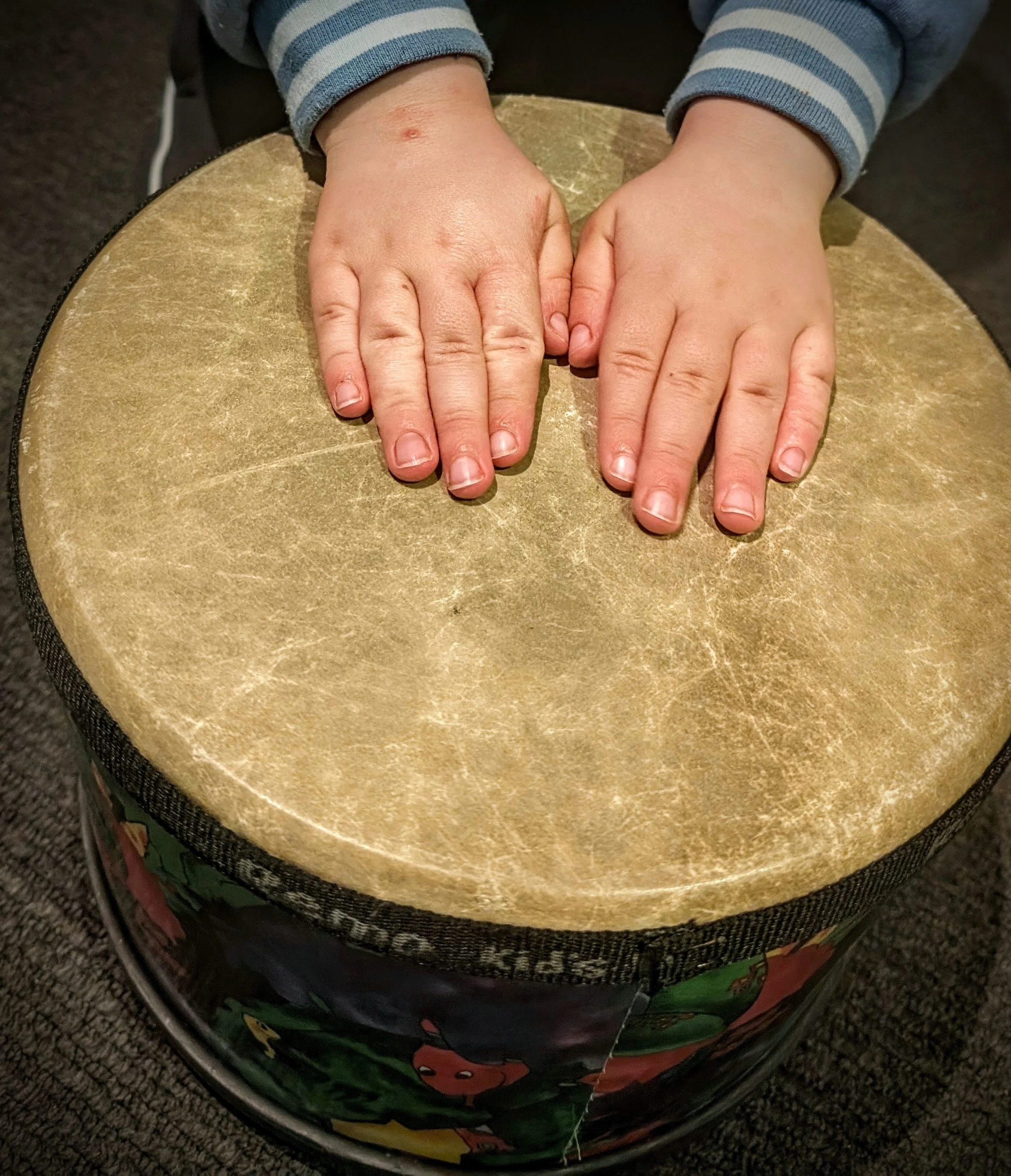
Music in Early Childhood
Music is an important part of early childhood, offering children a meaningful way to explore, communicate and connect with the world around them. In early childhood settings, music is not only an enjoyable experience, but also a powerful tool for learning.
Music & Me is informed by music therapy principles, using music as the medium to support children’s communication, social and emotional development, confidence and connection. This approach differs from music education programs that focus on teaching musical skills and knowledge. While children may naturally develop musical skills along the way, the primary focus is on using music as a tool to support each child’s overall growth and development.
How does Music & Me align with the Victorian Early Years Learning and Development Framework (VEYLDF)?
Music & Me has been thoughtfully designed to support the Victorian Early Years Learning and Development Framework (VEYLDF). Each session combines live singing, movement, instrumental play and creative music-making to support all five VEYLDF Learning and Development Outcomes.
Outcome 1: Children have a strong sense of identity
Music provides children with opportunities to express themselves, make choices and develop their confidence through singing, playing instruments and moving their bodies. Because music does not solely rely on verbal communication, every child can participate in ways that reflect their own strengths and capacities, providing opportunities for success and mastery which can lead to a positive sense of identity.
Outcome 2: Children are connected with and contribute to their world
Shared music-making creates meaningful opportunities for children to connect with educators and peers. Through music and movement, children practise listening, turn-taking, cooperation and responding to others. Non-verbal interactions such as smiles, laughs and encouragement are often observed while making music together.
Outcome 3: Children have a strong sense of wellbeing
Music supports the development of emotional regulation and self-expression. Movement activities can promote body awareness, physical development and coordination, while calming songs offer gentle musical experiences that help children regulate their emotions. Live music allows sessions to be adapted in the moment to match children’s energy, engagement and sensory needs.
Outcome 4: Children are confident and involved learners
Participating in music helps children to develop their attention, working memory, listening skills and self-regulation. Musical experiences such as learning actions to songs, playing instruments, dancing and responding to musical cues provide playful opportunities to build important foundations for learning and school readiness.
Outcome 5: Children are effective communicators
Music provides children with many ways to communicate and express themselves. Through singing, movement, gestures, facial expressions and instrumental play, children develop both verbal and non-verbal skills. Songs involving rhythm, rhyme, repetition, counting and storytelling support language development, early literacy skills and social communication.